
Are you confused about which AI tool to pick in 2026? We compared the top AI tools across pricing, features & use cases, plus a framework to help you choose faster.
Introduction
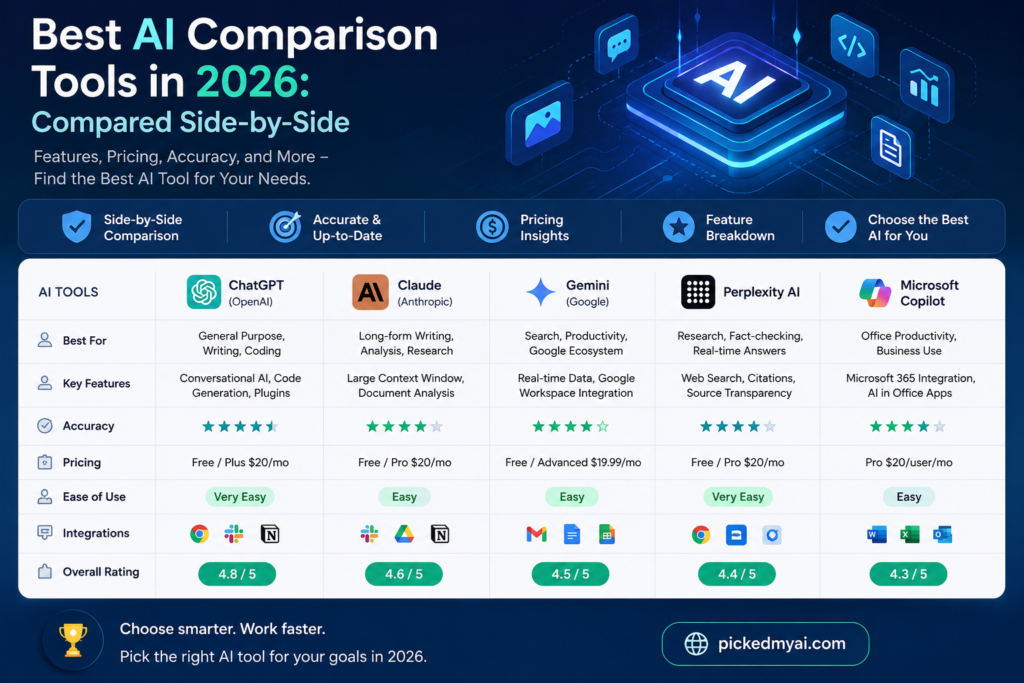
Finding the right AI comparison tools in 2026 is harder than it sounds. New tools launch every week, and most landing pages promise the same thing: “smarter,” “faster,” and “all-in-one.”
That noise makes real comparison difficult. Without reliable AI comparison tools, you end up picking based on marketing copy instead of actual fit.
This guide breaks it down properly:
- What actually matters when comparing AI tools
- The top tools across the categories people search for most
- A side-by-side table you can scan in seconds
- A simple framework to pick the right one for your workflow
Why Comparing AI Tools Matters in 2026
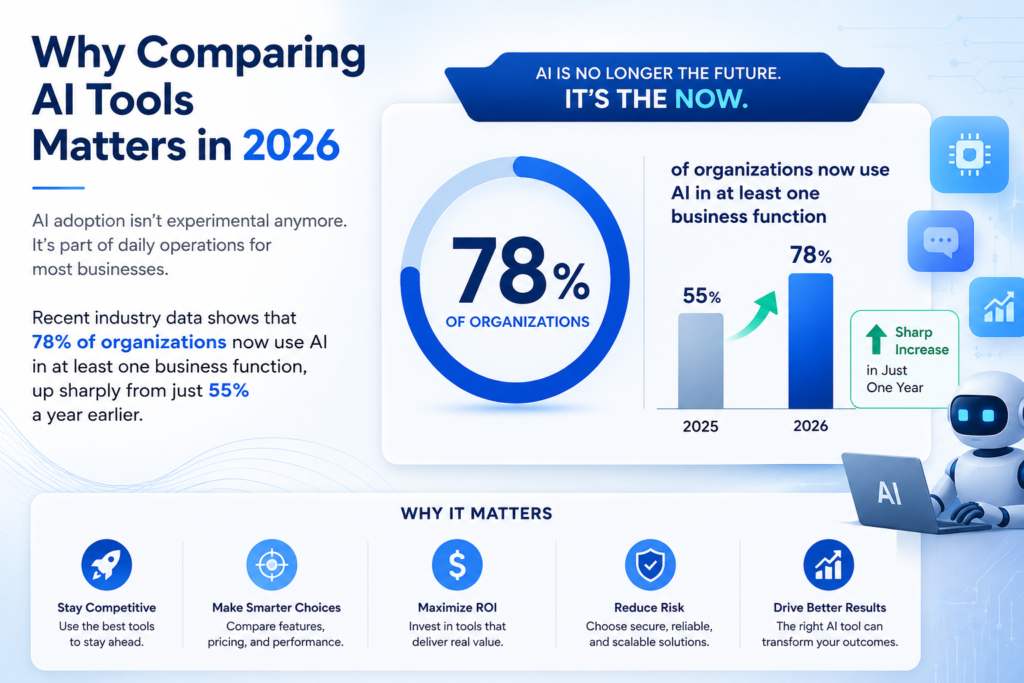
AI adoption isn’t experimental anymore. It’s part of daily operations for most businesses.
Recent industry data shows that 78% of organizations now use AI in at least one business function, up sharply from just 55% a year earlier.
Companies aren’t stopping at one use case either. Recent research shows businesses are now using AI across three different functions inside their workflow on average, up from just one or two in early 2024.
This is precisely why good AI comparison tools matter more than ever:
- More tools launch every month, and many overlap in features
- Pricing models vary widely, even for similar functionality
- Switching tools later costs time, data migration, and team retraining
A structured comparison upfront saves all three.
How We Compared These AI Tools
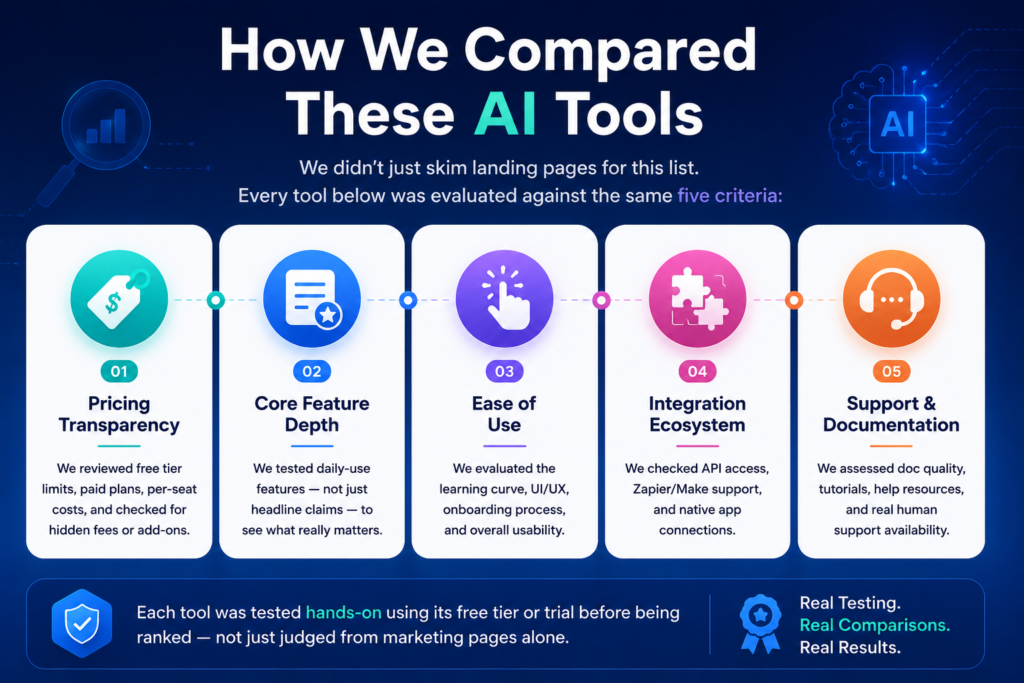
We didn’t just skim landing pages for this list of AI comparison tools. Every tool below was evaluated against the same five criteria:
- Core feature depth: daily-use functionality, not just headline features
- Pricing transparency: free tier limits, per-seat costs, hidden add-ons
- Integration ecosystem: API access, Zapier/ Make support, native app connections
- Real user feedback: cross-checked against G2, Capterra, and community discussions
- Support and documentation quality
Each tool was tested hands-on using its free tier or trial before being ranked, not just judged from marketing pages alone. This approach is what makes a comparison trustworthy, rather than just another rehashed listicle.
Best AI Comparison Tools by Category
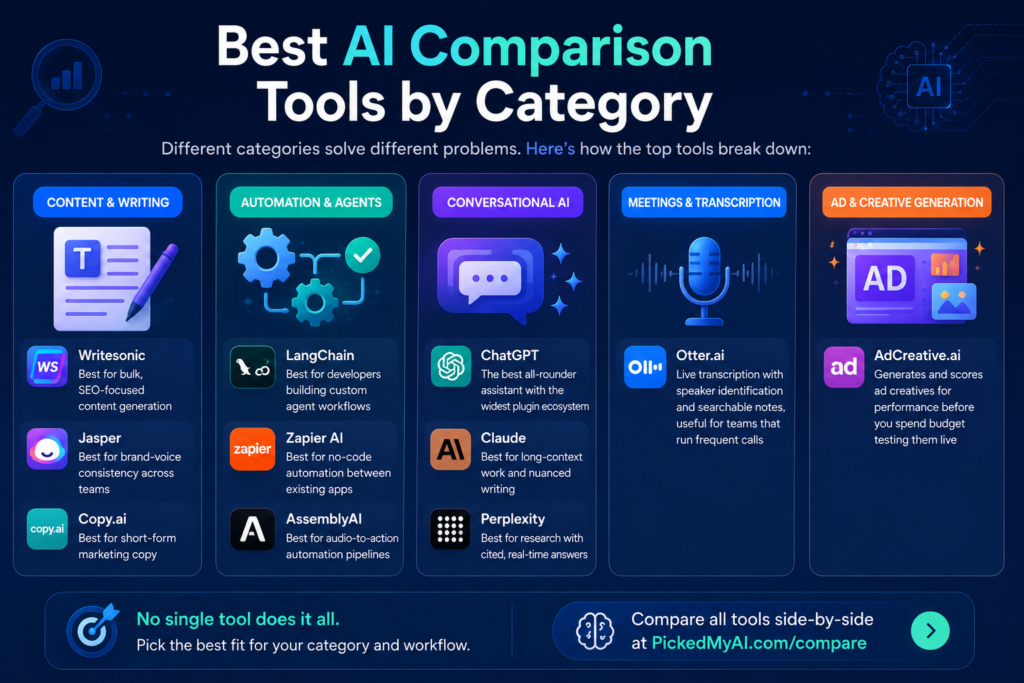
Different categories solve different problems. Here’s how the top tools break down:
Content & Writing
- Writesonic: best for bulk, SEO-focused content generation
- Jasper: best for brand-voice consistency across teams
- Copy.ai: best for short-form marketing copy
Automation & Agents
- LangChain: best for developers building custom agent workflows
- Zapier AI: best for no-code automation between existing apps
- AssemblyAI: best for audio-to-action automation pipelines
Conversational AI
- ChatGPT: the best all-rounder assistant with the widest plugin ecosystem
- Claude: best for long-context work and nuanced writing
- Perplexity: best for research with cited, real-time answers
Meetings & Transcription
- Otter.ai: live transcription with speaker identification and searchable notes, useful for teams that run frequent calls
Ad & Creative Generation
- AdCreative.ai: generates and scores ad creatives for performance before you spend budget testing them live
Side-by-Side Comparison Table
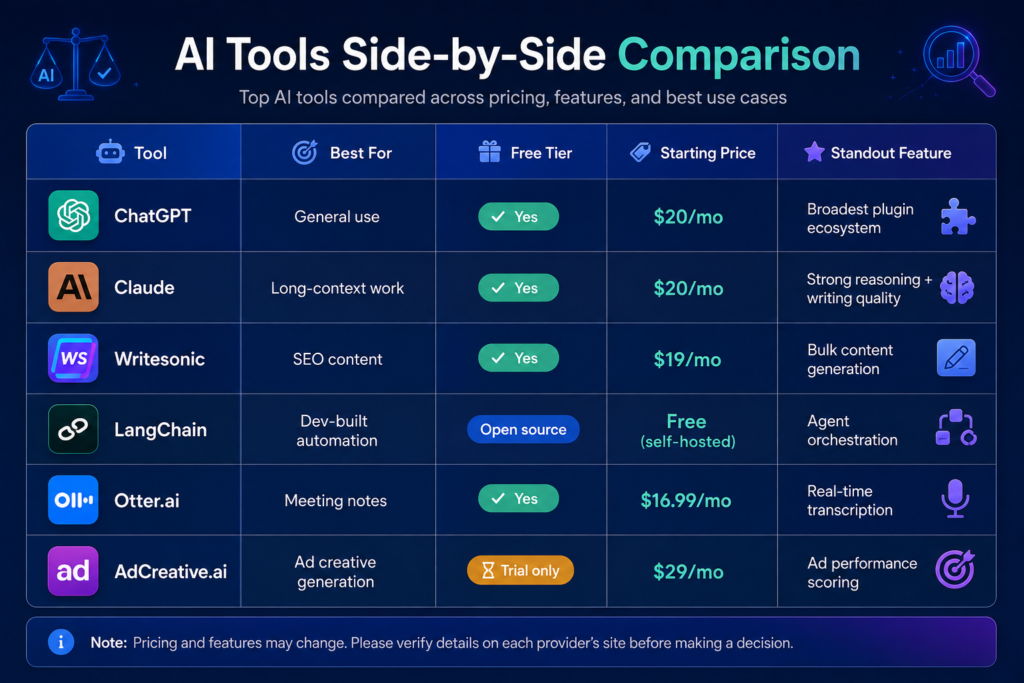
| Tool | Best For | Free Tier | Starting Price | Standout Feature |
|---|---|---|---|---|
| ChatGPT | General use | Yes | $20/mo | Broadest plugin ecosystem |
| Claude | Long-context work | Yes | $20/mo | Strong reasoning + writing quality |
| Writesonic | SEO content | Yes | $19/mo | Bulk content generation |
| LangChain | Dev-built automation | Open source | Free (self-hosted) | Agent orchestration |
| Otter.ai | Meeting notes | Yes | $16.99/mo | Real-time transcription |
| AdCreative.ai | Ad creative generation | Trial only | $29/mo | Ad performance scoring |
Note: verify pricing on each provider’s site before publishing. These change frequently, and stale figures hurt both accuracy and trust.
How to Choose the Right AI Tool for Your Use Case
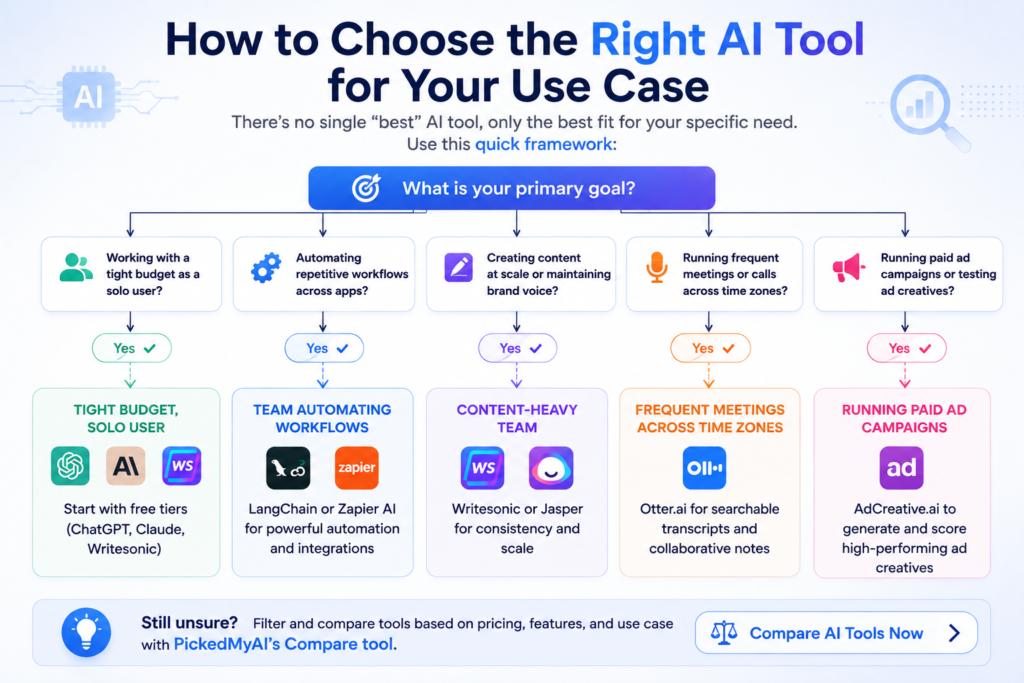
There’s no single “best” AI tool, only the best fit for your specific need. Use this quick framework:
- Tight budget, solo user → start with free tiers (ChatGPT, Claude, Writesonic)
- Team automating repetitive workflows → LangChain or Zapier AI
- Content-heavy team → Writesonic or Jasper for consistency at scale
- Frequent meetings across time zones → Otter.ai for searchable transcripts
- Running paid ad campaigns → AdCreative.ai to pre-test creative performance
Still unsure? Filter tools by your exact budget and use case with our Compare tool. It gives you a live, side-by-side breakdown beyond this list.
FAQs
What is the best free AI comparison tool?
It depends on your use case, but ChatGPT, Claude, and Writesonic all offer usable free tiers that let you test core functionality before committing to a paid plan.
How do I compare AI tools based on pricing?
Be sure to look beyond the sticker price. Check whether pricing is per-seat or flat-rate, what the free tier actually limits, and whether add-ons (extra credits, premium models) apply.
Are AI comparison tools accurate?
Only if they’re based on hands-on testing. Cross-check any comparison against independent sources like G2 or Capterra before trusting a single list.
What’s the difference between an AI directory and an AI comparison tool?
A directory lists available tools. A comparison tool lets you filter and evaluate them side-by-side against specific criteria like pricing or features.
How often should I re-evaluate my AI tool stack?
Every quarter is a reasonable baseline, given how rapidly pricing, features, and new competitors shift in this space.
Conclusion
The right AI tool isn’t the most hyped one. It’s the one that fits your actual workflow, budget, and team size.
Use the comparisons above as a starting point, shortlist two or three options, and test them yourself before committing long-term.
Want a live, filterable version of this comparison? Use PickedMyAI’s Compare tool to match tools against your exact requirements in a few clicks.
Discussion (0)
No comments yet. Start the discussion below!
Leave a Comment